
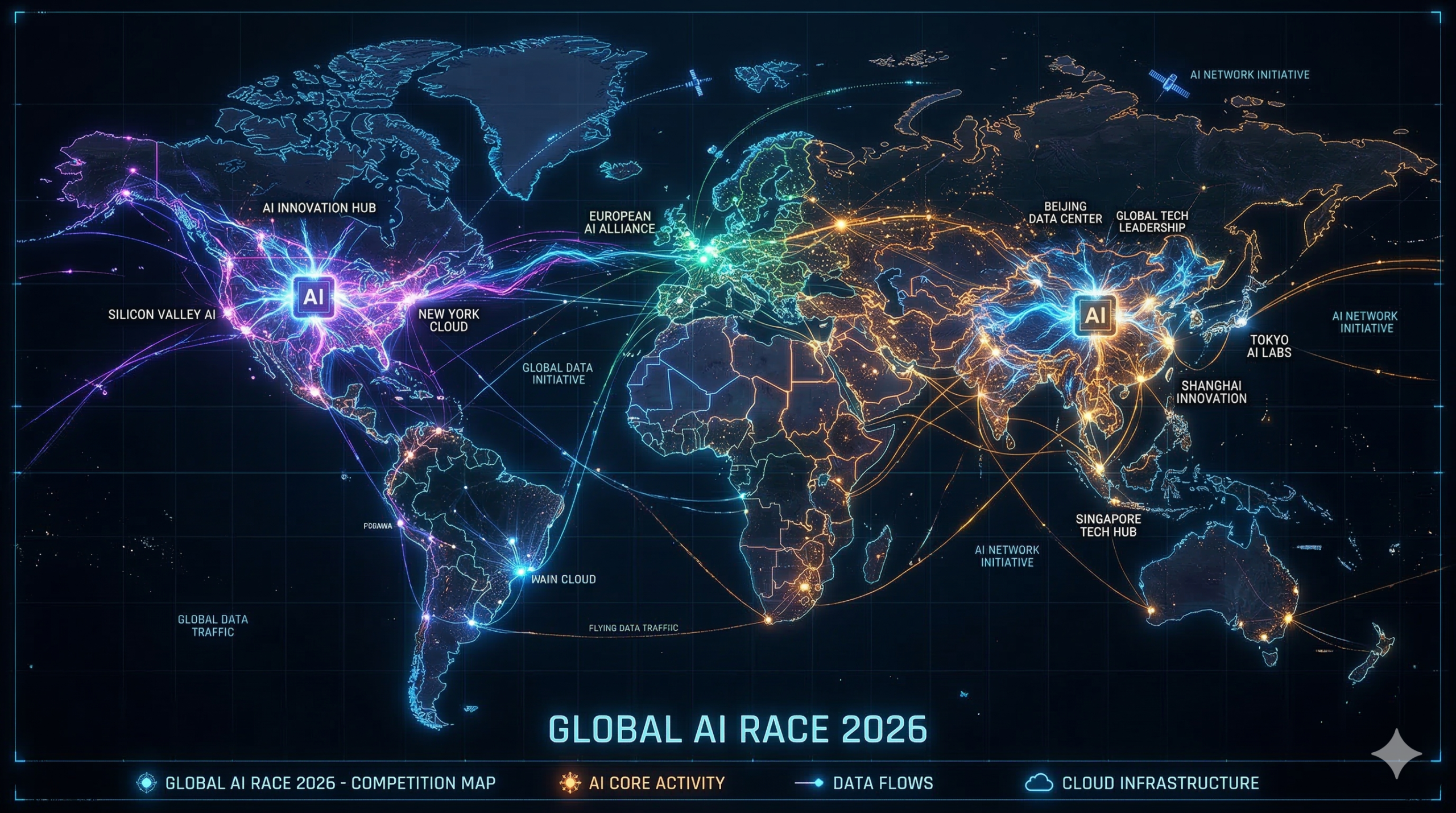
Artificial Intelligence continues to dominate the global technology landscape in 2026. However, the conversation is no longer just about innovation — it is about execution, competition, and real-world impact. From delayed AI models to global infrastructure expansion and government-level strategies, the AI race is entering a more mature and complex phase.
This article highlights the most important recent developments shaping the AI industry today.
AI Development Slows Down — But Competition Intensifies
One of the most notable updates comes from Meta, which recently delayed the release of its new AI model, internally known as “Avocado.” The delay was due to performance gaps compared to competing models, showing how difficult it has become to stay ahead in the AI race.
This reflects a broader trend: AI development is becoming more complex, expensive, and competitive. Companies are no longer just releasing models quickly — they are focusing on performance, reliability, and scalability.
Massive Investments in AI Infrastructure
At the same time, global tech companies are doubling down on AI infrastructure. Firms are investing billions into data centres, custom chips, and computing power to support next-generation AI systems.
For example, companies are building large-scale AI ecosystems that combine hardware, software, and cloud services — positioning AI not just as a tool, but as core infrastructure for the future.
This shift indicates that AI is moving from experimentation into full-scale deployment across industries.
Governments Enter the AI Race
AI is no longer limited to private companies. Governments are now actively shaping AI development strategies.
China, for instance, has announced plans to accelerate AI adoption across industries such as manufacturing, healthcare, and education. The goal is to boost productivity and reduce reliance on foreign technologies.
Meanwhile, the United States is expanding its global AI strategy by preparing to export complete AI systems — including infrastructure and tools — to allied countries.
This signals a new phase where AI becomes a key factor in global economic and technological competition.
Workplace Impact: AI Adoption Faces Challenges
Despite rapid adoption, not all AI implementations are smooth. Reports from Amazon show that internal AI tools are sometimes increasing workloads instead of reducing them. Employees have raised concerns about inefficiencies, errors, and pressure to adopt AI systems quickly.
This highlights an important reality: while AI offers massive potential, its integration into real-world workflows still requires refinement.
New AI Ecosystems and Industry Expansion
Beyond big tech, new players and ecosystems are emerging globally. Companies and startups are building AI platforms, launching open-source models, and supporting developers with infrastructure and tools.
For example, initiatives like startup support programs and open AI models are enabling smaller companies to participate in the AI economy, making the industry more competitive and accessible.
This expansion is accelerating innovation while also increasing competition across markets.
Leave a comment: